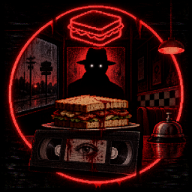
Serve Or Die gameplay video: A Community Guide to the Horror Demo
What a Serve Or Die gameplay video reveals about its food-service horror demo, rising tension, and first-shift learning curve.
Why the Demo Footage Matters
At first, the job looks like a routine food-service shift, but the customers, interruptions, and atmosphere quickly make it feel unsafe. A Serve Or Die gameplay video matters because it shows whether the blend of recipe assembly, workplace pressure, and surprise-driven horror is appealing before you spend time with the game. This Serve Or Die gameplay video guide separates directly observed player experience from details that the preview cannot confirm.
Player experience from the supplied community recording suggests that the demo builds tension by making ordinary tasks feel increasingly unreliable. You are not simply watching a horror sequence unfold; the footage centers on fulfilling orders, checking recipes, cooking ingredients, delivering food and drinks, and dealing with distractions around the shop.
| Directly observed in the community recording | Why it matters for prospective players | What the footage does not establish |
|---|---|---|
| Recipe notes, ingredients, cooking, food assembly, and drink service | The core loop requires attention to small order details | The complete final recipe list |
| A three-day demo progression | The visible workload expands as the preview continues | Total game length or campaign structure |
| Phone calls, power concerns, unusual visitors, and cleanup tasks | Horror is threaded through routine work instead of separated from it | The full explanation behind every event |
| Customer reactions to incorrect or delayed service | Accuracy appears to matter as much as speed | The exact scoring or failure rules |
The linked community-recorded Serve Or Die demo playthrough is useful evidence of the moment-to-moment experience, but it is still one player’s run. The recording also identifies the build as an early preview, meaning features, visuals, sound, and gameplay elements may change before any later version.
The Service Loop Shown in the Footage
The clearest lesson from the demo is that speed alone is not enough. The player has to recognize what a customer wants, locate the appropriate ingredients, handle cooking when needed, assemble the order, and deliver every requested item while other events compete for attention.
A Serve Or Die gameplay video works well as an operational preview because it reveals whether this kind of multitasking feels satisfying or stressful. The food-service mechanics are simple enough to understand quickly, but the horror framing makes small mistakes and interruptions more memorable.
| Shown demo day | New or visible work | Practical takeaway |
|---|---|---|
| Day 1 | Sandwiches, drinks, opening duties, and cleanup | Learn where recipes and ingredients are before trying to work quickly |
| Day 2 | Soups join the menu alongside sandwich orders | Treat each order as a short checklist rather than relying on memory |
| Day 3 | Cookies add another request type while encounters become more intense | Watch for unfinished items before switching to a new task |
The three-day count applies only to the preview run shown in the community recording. It should not be read as confirmation that the complete game has only three days, three menu expansions, or one fixed progression path.
A Lower-Error Routine for Orders
The footage supports a practical approach for anyone preparing to play:
- Read the customer request and consult the recipe reference before grabbing ingredients.
- Start any cooking task early, then use the waiting time to organize the remaining parts of the order.
- Check the requested protein, toppings, and drink one more time before delivery.
- Count how many separate items the customer requested so a second food item or drink is not forgotten.
- Finish the immediate order before exploring an interruption unless the game clearly demands otherwise.
| Player experience moment | Risk it illustrates | Habit to try |
|---|---|---|
| A customer reacts negatively after an order is understood as incorrect | A reasonable guess can still fail the request | Cross-check the visible recipe and the order details |
| Requests can include more than one item | Drinks or secondary food items are easy to miss | Mentally repeat the item count before serving |
| Tasks outside the counter area compete with service duties | Leaving one responsibility unfinished can raise pressure | Pause briefly and decide what needs attention first |
| Closing and cleanup occur after customer service | The shift does not become automatically safe when orders stop | Keep routine tasks in view until the day fully ends |
This approach is not about removing the horror. It is about freeing up enough attention to notice the environmental clues, strange dialogue, and uneasy pacing that give the demo its identity.
Why the Horror Pacing Works in Footage
Player experience is especially valuable for a game like this because the tension comes from contrast. Familiar restaurant tasks establish a baseline, then the community recording introduces unsettling conversations, warnings, suspicious visitors, power-related concerns, and sudden scare beats around that routine.
A Serve Or Die gameplay video can show something screenshots cannot: whether the timing between an ordinary task and an alarming event works for you. The supplied player reacts to several surprises, but that reaction is not a universal measurement of how frightening the game will feel to every viewer.
| Tension device seen in the recording | How it intersects with service work | Spoiler-light viewing takeaway |
|---|---|---|
| Employer calls and shifting instructions | Work obligations create pressure before anything overtly strange happens | Listen to dialogue instead of skipping directly to food prep |
| A concern involving the power and back area | The player has a reason to move away from the service counter | Notice whether off-counter tasks make the setting feel more tense |
| Odd customer behavior and warning-like messages | Everyday transactions become hard to read | Decide whether social discomfort adds to the horror for you |
| After-hours cleaning and closing work | The setting remains active after standard orders end | Watch how the demo handles the transition from service to isolation |
Community reports should be treated as impressions, not final documentation. A Serve Or Die gameplay video can capture the sound, pacing, interaction friction, and surprise timing of a demo, but it cannot confirm final performance, complete content guidance, or every story outcome.
How to Use a Serve Or Die Gameplay Video Before You Play
Rather than watching passively, use a Serve Or Die gameplay video as a quick compatibility test. Score each question below from zero to two points based on what you see; this is a personal decision tool, not a review score or a claim about the game’s quality.
| Question | 0 points | 1 point | 2 points |
|---|---|---|---|
| Does the recipe workflow look enjoyable? | It looks frustrating | I am unsure | It looks satisfying |
| Does time pressure improve the experience? | It feels stressful in a bad way | It could go either way | It makes the horror more engaging |
| Do unsettling customer interactions appeal to me? | Not really | I need more context | They are a major draw |
| Am I comfortable with an early-preview build? | I want finalized details first | I could wait for updates | I am fine judging the demo on its own |
| Is the visible gameplay enough to interest me? | I need much more evidence | I would watch more footage | I am ready to try it |
Use the total as a simple guide:
8–10 points: The demo’s mix of task management and horror likely matches your tastes.5–7 points: Watch additional official material or wait for clearer project details.0–4 points: The pressure-based service loop may not be the right fit.
On a second watch, focus on three moments: the first completed order, the first menu expansion, and the first time a non-service task pulls attention away from the counter. Those checkpoints reveal the game’s clarity, escalation, and horror rhythm more effectively than watching only for scares.
Community Takeaways and Official Next Step
The supplied community evidence points to a horror demo that gets much of its tension from turning familiar service tasks into a source of uncertainty. The linked Serve Or Die gameplay video shows food preparation, customer fulfillment, escalating menu demands, and increasingly uncomfortable events sharing the same small work environment.
That makes the preview most promising for players who enjoy horror games with active responsibilities rather than purely exploratory scares. It may be less appealing to players who want a relaxed cooking simulator, because accuracy, interruptions, and pressure are central to the player experience shown in the footage.
Community reports in the provided material are limited to one direct playthrough, so they cannot establish consensus about difficulty, replay value, final length, price, supported platforms, or the complete story. For current project details, use the official Serve Or Die page on itch.io rather than treating a community recording as a final feature list.
FAQ
What does a Serve Or Die gameplay video show?
The supplied Serve Or Die gameplay video follows a demo run involving food preparation, recipes, customer requests, drinks, cleanup, power-related tasks, and horror escalation. It provides a practical look at the game’s visible service loop and atmosphere without confirming every final feature.
Is the recorded version the finished game?
No. Community reports identify the footage as an early demo or preview. The recording notes that gameplay elements, visuals, and sound may change, so it should be used to judge the current demonstrated experience rather than a guaranteed final build.
What should new viewers pay attention to first?
Watch how the player reads orders, checks recipes, cooks ingredients, and manages requests containing multiple items. Then pay attention to how interruptions affect that workflow, because the contrast between routine service and unsettling events is the demo’s most distinctive visible feature.
Where can I find reliable updates about Serve Or Die?
Use the official itch.io listing for current information about the project. A Serve Or Die gameplay video is valuable for player experience, while the official page is the better source for availability and updated project details.
Related Guides
Serve Or Die Community: Why This Late-Night Horror Game Is Drawing Players In
Explore the Serve Or Die community through verified game details, player experiences, early feedback, and spoiler-light tips for new players.
Serve Or Die Discord: How to Find Reliable Community Updates and Demo Advice
Looking for Serve Or Die Discord information? Learn how to verify community spaces, avoid bad invites, and discuss the demo without spoilers.
Serve Or Die Fan Community: Where Players Share Night-Shift Horror Stories
A practical guide to the Serve Or Die fan community, spoiler-safe discussions, player reports, and official demo information.
Serve Or Die reddit: What Community Players Can Verify About the Horror Demo
A source-aware look at Serve Or Die's horror restaurant demo, player feedback, and what Reddit searchers can verify.