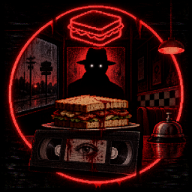
Serve Or Die survival guide: Survive the Demo's Most Stressful Night Shifts
Use this Serve Or Die survival guide to track orders, handle outages, learn the expanding menu, and stay calm during the demo's toughest rushes.
Treat Every Ticket as a Survival Checklist
The first night in Serve Or Die turns a small sandwich counter into a stress test, with orders arriving as the shift becomes increasingly unpredictable. This Serve Or Die survival guide matters because the observed rushes make every missed ingredient and interrupted thought more costly. Use this Serve Or Die survival guide to build a reliable order routine, handle distractions, and stay composed when the workday stops feeling ordinary.
This article is intentionally scoped to the demo behavior shown in two community playthroughs. For the canonical game page, visit the official Serve Or Die page on itch.io. Exact recipes, story events, and timing may differ by build, so use the in-game notebook as your final authority.
The supplied first community demo playthrough and second community demo playthrough show the same core progression. The figures below are consistency checks across those two reports, not global player statistics.
| Community-report observation | Reports showing it | What it means for survival |
|---|---|---|
| Opening guidance mentions a notebook and a fuse box near the storage area | 2 of 2 | Learn both locations before an outage forces you to search. |
| Day 1 centers on sandwiches, toppings, sauces, and drinks | 2 of 2 | Establish a fixed sandwich-building sequence immediately. |
| Soup is added on Day 2 | 2 of 2 | Expect multi-item orders and more opportunities to lose track of a ticket. |
| Cookies are introduced on Day 3 | 2 of 2 | Add warming and packaging checks to your routine. |
| A high-pressure late sequence requires multiple sandwiches | 2 of 2 | Accuracy under pressure becomes more important than improvisation. |
The key lesson is that survival is an information-management problem. This Serve Or Die survival guide uses the shared demo patterns to help you keep the active order clear even when customer dialogue, environmental events, or a power problem competes for your attention.
Read Orders in the Same Sequence Every Time
Speed starts before you pick up an ingredient. Player experience shows that tickets can combine sandwiches, soups, drinks, and later cookies, so trying to remember everything as one long sentence invites mistakes.
The core Serve Or Die survival guide habit is to convert every request into a short sequence: quantity first, then base item, toppings, sauces, and extras. This makes it easier to recover after a distraction without rebuilding the entire order from memory.
| Reading pass | Question to answer | Example mental note | Error it prevents |
|---|---|---|---|
| 1. Count | How many separate items are requested? | Two sandwiches, one soup | Forgetting a second item in a combined order |
| 2. Base | Which sandwich protein or primary item is needed? | Chicken, then beef | Starting with the wrong sandwich |
| 3. Toppings | Which visible ingredients belong on each sandwich? | Lettuce, onion, cheddar | Adding a familiar ingredient that was not requested |
| 4. Sauces | Which condiments are required? | Ketchup and mustard | Serving an almost-correct sandwich without its final sauce |
| 5. Prep | Does an item need cooking, warming, or packaging? | Cook meat; warm and bag cookie | Delivering an unfinished item |
| 6. Final scan | Does every category match the ticket? | Base, toppings, sauces, extras | Panicked handoff during a rush |
Use a consistent reading direction every time. A practical mental code is:
- Count the items before touching the stations.
- Name each sandwich base in order.
- Attach toppings and sauces to the correct sandwich.
- Check drinks, soup, and cookies as separate products.
- Perform one final category scan before serving.
Community reports show a player realizing a sandwich was incomplete only after attempting delivery. That is the mistake to avoid: a sandwich can look finished while still missing one requested sauce. Add sauces last, then visually confirm both condiment slots before you hand it over.
Use Each Day to Learn One New System
A useful Serve Or Die survival guide separates learning from panicking. The demo adds menu complexity over multiple days, giving you an opportunity to turn each new station into a familiar routine before the late-game pressure arrives.
| Demo stage | Community-reported menu focus | Best preparation before opening | Service priority |
|---|---|---|---|
| Day 1 | Sandwiches and drinks | Identify protein, topping, sauce, and beverage locations. | Build clean habits for reading and completing sandwich tickets. |
| Day 2 | Soup joins the menu, including tomato and mushroom varieties in player experience | Read the notebook and locate the soup workflow. | Treat soup as a separate line item, not an afterthought. |
| Day 3 | Cookies appear, with warming and bagging shown in community reports | Review the cookie interaction before the first request arrives. | Confirm the cookie is prepared and packaged before delivery. |
| Late Day 3 | A rapid sequence of sandwich requests | Clear your mental queue after each completed sandwich. | Prioritize ticket accuracy, then speed. |
Day 1 is more than an introduction. Use it to create an efficient route through the counter: read the ticket, start required cooking, collect toppings, add sauces, then deliver. Once the route feels automatic, you have more mental capacity for the horror elements and customer interruptions.
Do not try to memorize a universal recipe list from a video. The supplied footage demonstrates individual customer requests, but it does not establish a complete, permanent recipe database for every version of the game. The notebook and the active ticket should always override memory.
For Day 2, avoid mentally merging the soup with the sandwich. Think of an order such as “sandwich plus soup” as two finished products that happen to be delivered together. On Day 3, give cookies the same attention: community reports show a warming and bagging step, so a cookie should not be treated as an instant grab-and-go item.
Protect Your Attention During Outages and Scares
The tension in Serve Or Die is not limited to what customers order. Community reports describe warning notes, unsettling movement, sudden appearances, strange conversations, power outages, cleanup tasks, and after-hours requests. Each can interrupt the order you were holding in your head.
The best Serve Or Die survival guide practice is simple: after any interruption, restart your order check instead of trusting your memory. Losing a few seconds to reread a ticket is better than wasting an entire order because you resumed at the wrong step.
| Interruption | What community reports show | Recovery response |
|---|---|---|
| Power outage | Opening instructions point players toward a fuse box near the storage area. | Mentally preserve the item count, restore power, then reread the full ticket. |
| Sudden visual or audio event | Players report startling appearances and environmental movement. | Stop adding ingredients until you can identify the current order stage. |
| Warning note or strange dialogue | The demo includes ominous messages and distracting customer conversations. | Treat it as atmosphere first; return attention to the active ticket. |
| Cleanup objective | Shift-end cleaning is part of the reported demo loop. | Finish the assigned task, but remain alert for a follow-up customer interaction. |
| After-hours customer | Player experience includes a request after apparent closing work begins. | Do not assume the shift is over until the game confirms it. |
Use this quick recovery protocol whenever the game breaks your concentration:
- Stop moving ingredients for a moment.
- Identify what is already cooking or assembled.
- Read the ticket from quantity through sauces.
- Resume from the earliest uncertain step.
- Scan the completed item before serving.
This process also protects you from duplicate ingredients. If you cannot remember whether you added onion, cheddar, ketchup, or mustard, do not guess based on the sandwich's appearance. Recheck the order and rebuild only when necessary.
Handle the Late Rush With Accuracy First
Minor demo spoiler: both community reports reach a late Day 3 encounter involving an armed visitor, a demanding boss, and a rapid sequence of sandwich requests. The footage clearly establishes intense pressure, but it does not confirm an exact timer, scoring rule, or universal failure condition. One player experience ends badly after the batch takes too long, making this a useful precision drill rather than a moment to improvise.
At this point, the Serve Or Die survival guide becomes less about learning stations and more about controlling your decision order. Do not chase maximum speed by assembling unknown sandwiches ahead of time. Tickets vary, and prebuilding the wrong item can create more delay than a deliberate read-through.
| Rush priority | What to do | Why it works |
|---|---|---|
| 1. Read | Confirm the current sandwich base and all requested ingredients. | Prevents a wrong build before the timer pressure takes over. |
| 2. Cook | Start the required protein as soon as the ticket is clear. | Uses preparation time while you organize the next steps. |
| 3. Assemble | Complete one sandwich category by category. | Reduces accidental ingredient crossover between orders. |
| 4. Verify | Check protein, toppings, sauces, and any extras. | Catches the missing final ingredient that can invalidate an order. |
| 5. Deliver | Serve only after the final scan, then reset for the next ticket. | Keeps the next order from blending into the previous one. |
The footage suggests that lost time often comes from second-guessing and correcting an incomplete sandwich, not merely from moving slowly. Keep your focus narrow: make the current ticket correct, deliver it, and only then move to the next one.
Serve Or Die Survival Guide FAQ
Is this Serve Or Die survival guide for the full game?
No. This Serve Or Die survival guide is based on the demo events and mechanics shown in the supplied community reports. Use it as a preparation framework, then follow the current in-game notebook and order tickets for your version.
What should I do when the power goes out?
Preserve the active order with a short mental code, such as the item count and sandwich base. Restore power using the fuse-box guidance mentioned at the start of the demo, then reread the entire ticket before resuming prep.
What menu additions appear after Day 1?
Community reports show soup being added on Day 2, with tomato and mushroom soup mentioned in the recorded orders. Day 3 adds cookies, and player experience shows them being warmed and bagged before serving.
What is the single most useful survival habit?
Perform a final check in the same order every time: base, toppings, sauces, then extras. That is the central rule of this Serve Or Die survival guide because it remains useful during ordinary service, outages, scares, and the final high-pressure rush.
Related Guides
Serve Or Die beginner guide: Find Reliable Help for Your First Session
A source-aware Serve Or Die beginner guide for finding Steam community help, judging tips, and planning your first session.
Serve Or Die customer guide: Orders, Encounters, and Survival Tips
This Serve Or Die customer guide covers orders, customer cues, cleanup steps, and spoiler-light demo survival tactics.
Serve Or Die gameplay guide: Complete Demo Tips for Every Night Shift
Learn a practical Serve Or Die demo routine for accurate orders, food prep, cleanup, and tense late-night shifts.
Serve Or Die guide: Reliable Research, Setup, and Progress Checklist
A practical Serve Or Die guide for verifying sources, planning your first session, and recording confirmed mechanics.