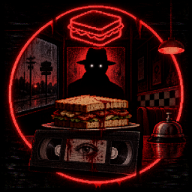
Serve Or Die customer guide: Orders, Encounters, and Survival Tips
This Serve Or Die customer guide covers orders, customer cues, cleanup steps, and spoiler-light demo survival tactics.
Every ordinary order in Serve Or Die can become a problem when a missing sauce, burnt protein, or sudden disturbance breaks your concentration. Use this Serve Or Die customer guide to build accurate sandwiches, recognize when a visitor is part of a special encounter, and keep the night shift moving. This Serve Or Die customer guide matters because the demo turns a simple food-service routine into psychological-horror pressure, where a wrong response can waste food or hide the next required interaction.
How to Use This Serve Or Die Customer Guide
Dead Tape Studio describes Serve Or Die as a PSX-style psychological horror game set in a small sandwich shop during a night shift. The core loop is simple: take orders, prepare food, serve customers, and stay alert as the shop becomes increasingly unsettling. Check the developer's official Serve Or Die demo page on itch.io for the current Windows build and release information.
The official listing also identifies the game as an early demo. That matters because visuals, sounds, mechanics, and gameplay details may change before a final release. This guide therefore separates official information from player experience observed in public demo playthroughs.
| Information | Source Status | How to Use It |
|---|---|---|
| Night-shift sandwich-shop setting | Official | Expect food preparation and customer service to drive progression. |
| Psychological horror and PSX/VHS-style atmosphere | Official | Treat environmental changes as intentional gameplay cues, not just decoration. |
| Strange and unsettling visitors | Official | Do not assume every customer interaction follows a routine order pattern. |
| Exact recipes, timing, and customer behavior | Player experience | Use them as practical demo guidance, not a permanent official database. |
| Late-shift order pressure | Player experience and community reports | Prioritize the current prompt and avoid relying on memorized shortcuts. |
Player experience note: Customer examples, menu progression, and problem-solving tips below come from two public demo playthroughs. They are useful for preparing for the current demo, but they are not developer-published rules.
That is why this Serve Or Die customer guide focuses on reliable habits rather than pretending every scene has one permanent, fixed solution.
Master the Order Loop Before the Shift Escalates
The most effective way to survive difficult customers is to make ordinary orders nearly automatic. In player experience, mistakes most often happen when the player begins assembling food before fully processing the request, forgets a sauce, leaves cooked food unattended, or delivers an item imprecisely.
Before touching an ingredient, reduce every request to a mental checklist:
base | protein | fillings | sauces | extras
For example, a chicken-and-lettuce sandwich is straightforward. A larger request involving a sandwich, soup, beer, or cookies becomes much easier when each requested item is separated before preparation begins.
| Step | What to Do | Accuracy Check | Common Failure to Avoid |
|---|---|---|---|
| 1. Capture the order | Listen or read the entire request first. | Count sandwiches, drinks, soups, and cookies. | Starting on the first ingredient and forgetting the rest. |
| 2. Identify the protein | Determine whether the order uses chicken, beef, or no sandwich protein. | Confirm the protein before cooking. | Cooking the wrong item because dialogue was rushed. |
| 3. Cook and monitor | Prepare the protein, then return before it is overcooked. | Do not leave food unattended while gathering extras. | Letting chicken or beef burn during a longer order. |
| 4. Assemble completely | Add fillings, cheese, tomato, onion, lettuce, ketchup, and mustard as requested. | Check every named component, especially sauces. | Remembering a sauce but failing to apply it. |
| 5. Deliver and reset | Hand the completed item to the intended customer, then clear your mental checklist. | Confirm the handoff registers before starting another order. | Dropping food, mixing orders, or carrying an old recipe forward. |
Community playthroughs show that sauces are not just background details. Ketchup and mustard need to be applied as part of the sandwich assembly process. If a customer remains in place after you believe an order is complete, recheck the recipe before assuming the game is stuck.
Menu Items Seen in the Demo
The following rollout appeared in both reviewed playthroughs. The “2/2” notation only means both recordings showed the item; it is not a broader player-performance statistic or a guarantee for future builds.
| Service Category | Examples Seen in Demo Playthroughs | Planning Tip | Observed In |
|---|---|---|---|
| Sandwiches | Chicken, beef, lettuce, onion, cheddar, tomato, ketchup, mustard | Build the sandwich from a complete ingredient list rather than memory fragments. | Day 1, 2/2 videos |
| Drinks | Soda and beer | Track quantities carefully when a customer asks for multiple drinks. | Day 1, 2/2 videos |
| Soup | Tomato soup and mushroom soup | Treat soup as a separate handoff, not part of the sandwich itself. | Day 2, 2/2 videos |
| Cookies | Warmed cookies served in a bag | Learn the preparation step from the in-game notebook before the rush begins. | Day 3, 2/2 videos |
A useful practical rule is to finish one clearly defined item at a time. Do not begin a second sandwich until the first recipe is complete unless the game is actively pressuring you. This lowers the risk of placing the wrong cheese, sauce, or protein into an otherwise correct order.
Serve Or Die Customer Guide: Customer Types and Priorities
The important distinction is not whether a customer is polite. It is whether the interaction still follows the normal service loop. Use this Serve Or Die customer guide as a triage tool: identify the type of encounter, decide what requires attention first, and only then begin preparing food.
| Encounter Type | What You May Notice | Best Response | Evidence Basis |
|---|---|---|---|
| Routine single-item customer | A direct sandwich or drink request | Follow the five-step order routine without overthinking the dialogue. | Player experience |
| Multi-item customer | Two sandwiches, a sandwich plus drinks, or a sandwich plus soup | Separate each item into its own checklist and complete them deliberately. | Player experience |
| Open-choice customer | The customer allows any food or drink | Keep the selection simple and serve a complete, valid-looking item rather than improvising a huge order. | Player experience |
| Odd-payment customer | Strange payment, an unusual coupon, or suspicious dialogue | Keep your attention on the stated food request and the active interaction. | Player experience |
| Unsettling visitor | Unusual movement, invasive behavior, unexplained dialogue, or a change in the room | Pause, observe, and inspect the newly changed area when the normal order loop breaks. | Official premise and player experience |
| Urgent late-shift encounter | Hostile dialogue, multiple fresh requests, or pressure to move faster | Re-read every current request. Speed helps only after the recipe is correct. | Player experience |
A customer requesting two sandwiches is a test of separation, not an invitation to combine every listed ingredient into one oversized order. Treat each sandwich as a distinct finished item. By contrast, an open-choice request gives you room to choose a simple order and move forward without trying to guess a hidden preference.
Read the Shop, Not Just the Counter
The official premise says the night becomes harder to interpret as reality starts to feel uncertain. In practice, player experience suggests that an open door, a new note, a power loss, a sound cue, or a moved object may matter as much as the person at the counter.
When a scene changes, avoid repeatedly remaking an already completed sandwich. First, finish any active customer interaction. Then inspect the most recently changed part of the shop, especially nearby doors, storage areas, and interactive equipment.
Community reports: Comments associated with the official demo page indicate that players have encountered different late-demo outcomes tied to a mysterious order sequence. Dead Tape Studio has not published a formal route chart in the provided material, so treat exact ending requirements shared by players as spoilers and unverified strategies rather than official rules.
Recover From Interruptions and Stalled Progress
When the game appears to stop advancing, the answer is usually a missed physical task rather than a need to prepare random food. The best response is to work backward from the most recent instruction, customer request, or environmental change.
| Situation | First Place to Check | Practical Response | Avoid |
|---|---|---|---|
| Shift has just begun | Phone and notebook | Answer the phone, review the workstation instructions, and open for service. | Opening the shop before understanding the available stations. |
| Power goes out | Exterior area near storage | Locate and interact with the fuse box mentioned during the briefing. | Searching unrelated rooms while the outage remains unresolved. |
| Customer will not progress | Finished order and ingredient list | Verify protein, fillings, sauces, item count, and delivery target. | Assuming dialogue alone completed the handoff. |
| Cleanup is required | Locker, mop, and visible floor marks | Retrieve the mop, clean the marked areas, and return the tool when finished. | Trying to close the shift while the cleanup tool is still in use. |
| A strange cue interrupts service | The immediate area around the shop | Inspect the newest visual, sound, object, or door change. | Making extra food without an active request. |
Use these recovery habits during every run:
- Repeat the full order to yourself before starting preparation.
- Keep one customer’s request active in your mind at a time.
- If food has been dropped, spoiled, or mixed up, remake it instead of trying to force the delivery.
- During a high-pressure sequence, reset your checklist whenever a new order is given.
- Read the in-game notebook when new menu items appear instead of assuming they use the same preparation method.
The game’s tension works because routine and danger overlap. Staying methodical is more valuable than rushing blindly.
Serve Or Die Customer Guide FAQ
What kind of game is Serve Or Die?
Serve Or Die is a psychological horror game by Dead Tape Studio in which you run a small sandwich shop during the night shift. The official description emphasizes food service, strange customers, retro PSX-inspired visuals, and an atmosphere that becomes increasingly disturbing.
What should I do if a customer does not accept my order?
Start by checking the complete request again. Player experience indicates that missing sauces, incorrect ingredients, unfinished cooking, incorrect item counts, or an incomplete handoff can prevent progress. Rebuild the order carefully if you are unsure rather than making unrelated food.
Does this Serve Or Die customer guide list every customer and recipe?
No. The Serve Or Die customer guide is designed to help with recurring customer patterns, order-management habits, and special-encounter awareness without claiming that the current demo contains a complete, permanent customer database. Because the demo is still in development, exact scenes and mechanics may change.
Are there alternate endings in the demo?
Community reports suggest that players have recorded different outcomes around a late special-order sequence. However, the supplied official material does not provide confirmed route requirements. For a first playthrough, focus on following the active order accurately and observing the environment rather than chasing undocumented ending instructions.
Related Guides
Serve Or Die beginner guide: Find Reliable Help for Your First Session
A source-aware Serve Or Die beginner guide for finding Steam community help, judging tips, and planning your first session.
Serve Or Die gameplay guide: Complete Demo Tips for Every Night Shift
Learn a practical Serve Or Die demo routine for accurate orders, food prep, cleanup, and tense late-night shifts.
Serve Or Die guide: Reliable Research, Setup, and Progress Checklist
A practical Serve Or Die guide for verifying sources, planning your first session, and recording confirmed mechanics.
Serve Or Die how to play: A Beginner's Guide to Surviving the Night Shift
Learn the Serve Or Die demo loop: cook sandwiches, follow orders, manage outages, clean up, and handle escalating pressure.