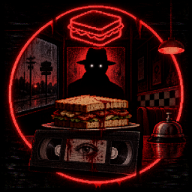
Serve Or Die Review: A Clever Sandwich-Shop Horror Demo With Night-Shift Tension
A Serve Or Die review of the demo's sandwich-making loop, VHS-inspired horror, escalating customers, and its best audience.
Serve Or Die Review: The Short Verdict
A quiet sandwich-shop night shift, a small stack of orders, and a figure that appears to be watching are enough to make routine work feel unsafe. This Serve Or Die review matters because the demo turns familiar food-service tasks into a compact horror scenario where speed and awareness compete for the same attention. Drawing on community reports from two demo playthroughs and a published game summary, this Serve Or Die review finds a promising, intentionally off-kilter experience whose best asset is escalating pressure.
Community-report snapshot of the documented demo:
| Observed element | What the demo shows | Why it matters |
|---|---|---|
| Shift structure | Three in-game workdays with rising demands | The tension builds in clear stages rather than arriving all at once. |
| Setting | A lone worker in a small sandwich shop at night | The confined workplace makes ordinary interruptions feel threatening. |
| Menu growth | Sandwiches and drinks first, then soup and cookies | Each new item adds another step to manage during busy moments. |
| Food condition | Meat can burn, and unattended food can spoil | Order timing affects both performance and stress. |
| Horror tone | VHS-inspired presentation, strange customers, and a food-themed mascot | The demo mixes unease with deliberately absurd humor. |
Serve Or Die's strongest idea is restraint. It does not need a complicated restaurant-management system to establish tension; it asks players to learn a small workspace, prepare orders correctly, and then deal with increasingly unreliable circumstances. Community reports describe a steady climb from awkward customer interactions to power failures, suspicious activity outside, and direct threats.
This is a cautiously positive demo assessment rather than a final-release verdict. The available footage identifies the build as an early preview, with features, visuals, sounds, and gameplay potentially subject to change. This Serve Or Die review therefore evaluates only the documented demo; the official Serve Or Die page on itch.io is the best place to confirm the current build and availability.
How the Night-Shift Loop Escalates
The early loop is easy to understand. You consult a recipe guide, cook the requested protein, assemble a sandwich with the correct toppings and sauces, then hand it to the customer. Community reports show that drinks can be served alongside food preparation, giving players brief windows to make progress while meat is cooking.
That simplicity is intentional. Serve Or Die creates pressure by adding just enough new work to disrupt a routine players may have started to trust. Soup and cookies are not mechanically overwhelming on their own, but they become meaningful when several customers are waiting and the environment begins demanding attention.
Community-report demo progression, with mild spoilers:
| Shift | New work introduced | Escalation shown |
|---|---|---|
| Day one | Sandwiches, soda, and beer | Recipe onboarding, strange customers, and an exterior fuse-box repair. |
| Day two | Tomato and mushroom soup | More multi-item orders, unsettling conversations, and disturbances near the shop. |
| Day three | Heated, wrapped cookies | A more stressful sequence involving several sandwich orders and explicit threats. |
The key operational lesson is order sequencing. In player experience, both raw and cooked food can become unusable if left too long, while meat can burn when ignored. That makes stockpiling ingredients a poor habit. It is usually smarter to start only the requested protein, use its cook time to gather a drink or toppings, and finish the order before beginning the next one.
A dependable rhythm looks like this:
- Check the order display before touching ingredients.
- Start the required protein first.
- Use cooking time for drinks, soup, or toppings.
- Deliver finished items promptly and clear unusable food.
- Reset the counter before a larger order arrives.
This is where the demo earns its tension. The player is not solving a complex puzzle; they are trying to preserve a simple process while the game finds reasons to interrupt it.
Why the Horror Lands
Serve Or Die uses work as the delivery mechanism for horror. Food preparation establishes a predictable baseline, then a blackout, an intrusive customer, a strange sound, or a change in the mascot's behavior interrupts that baseline. Community reports repeatedly highlight the discomfort of having to leave the counter to restore power while uncertainty builds outside the shop.
Community reports identify these pressure points:
| Horror device | Example from the demo | Effect on the player |
|---|---|---|
| Routine interruption | A power outage sends the worker to an exterior fuse box | The player must abandon the familiar counter area. |
| Customer boundary violations | Customers linger, appear unexpectedly, or cross into staff space | Normal service interactions become unpredictable. |
| Performance pressure | Later requests demand several items under a threat | Accuracy becomes stressful instead of merely busywork. |
| Mascot presence | A food-themed figure remains visible around the workplace | The setting never fully feels safe, even during quiet moments. |
| VHS-inspired atmosphere | A major-media summary describes an increasingly unsettling VHS-style tone | The low-fi presentation supports the uneasy setting. |
The demo also benefits from dark comedy. Community reports mention bizarre payment attempts, odd dialogue, eccentric patrons, and situations that would be funny in a normal service game. Here, that humor makes the horror less predictable. A moment can feel silly, then abruptly feel hostile once the player realizes the interaction is obstructing their work or putting them under pressure.
Community reports frequently compare the game to Kiosk because both use a first-person, task-oriented food-service format. The comparison is useful as a genre reference, but it should not overshadow what Serve Or Die is doing differently in the available demo: physical food handling, spoilage and burning risks, a conspicuous mascot, and an escalating collection of unsettling customers.
The central point of this Serve Or Die review is that the game already understands how to turn inconvenience into suspense. Its long-term identity will depend on whether a fuller version continues developing those ideas beyond the introductory shifts.
Strengths, Caveats, and the Right Audience
The demo has a firm grasp of short-form pacing. The preparation system is understandable, while the narrative interruptions create just enough distraction for mistakes to feel plausible. It does not rely solely on jump scares; much of the discomfort comes from realizing that a normal task has become difficult because the environment will not leave you alone.
Evaluation based on player experience of the demo:
| Strength | Why it works | Caveat |
|---|---|---|
| Fast onboarding | Recipe instructions and the compact shop are easy to read | The full game's progression cannot be judged from the preview. |
| Escalating menu | Soup and cookies make familiar work busier | More menu depth does not automatically equal more long-term variety. |
| Food-condition systems | Spoilage and burning create meaningful timing decisions | Players who dislike management pressure may find it frustrating. |
| Strange customer writing | Comedy keeps the horror from becoming one-note | The absurd tone will not appeal to every horror fan. |
| Physical interactions | Throwing and placing items make service feel active | Community reports suggest aiming can become awkward under stress. |
The interaction friction is worth noting. Community reports show occasional missed throws, dropped items, and moments when serving a drink or soup requires more careful aim than expected. Those mishaps can be funny and fit the chaos of the premise, but they may also frustrate players looking for a polished, low-pressure restaurant simulation.
Who should try it?
- Task-oriented indie-horror fans who enjoy short, escalating demos.
- Players who like uneasy workplaces, strange dialogue, and surreal comedy.
- Viewers curious about a food-service horror game with more active item handling.
- Players comfortable with timed multitasking and sudden disruptions.
For readers deciding whether to try the preview, this Serve Or Die review recommends it for a focused single sitting rather than as evidence of a complete management game. The best approach is to enjoy the premise, expect some deliberately chaotic interactions, and avoid assuming that every mechanic shown in the demo represents the final version.
Five Practical Tips for the Demo
These are player-experience tips based only on systems demonstrated in available footage. They are meant to reduce preventable mistakes so the horror beats can do their job.
| Tip | What to do | Why it helps |
|---|---|---|
| Read the recipe notebook | Review ingredients and preparation steps before opening | Reduces hesitation when the first orders arrive. |
| Cook only to order | Avoid preparing extra meat “just in case” | Community reports show that unattended food can spoil or burn. |
| Use cook time well | Grab drinks and toppings while meat is on the grill | Keeps each order moving without creating unnecessary clutter. |
| Keep the counter clear | Discard ruined food and finish open orders | Makes it easier to identify the next needed item under pressure. |
| Learn the power route | Remember that the fuse box is outside near storage | Prevents wasted time when the outage forces you away from the counter. |
Do not mistake fast cooking for permission to hoard finished ingredients. Player experience indicates that a cooked protein can also become unusable, turning a shortcut into a costly restart. When an order becomes demanding, accuracy should take priority over speed: verify the display, complete the next actionable step, and hand off ready items before starting another complex task.
The stranger the dialogue becomes, the more important it is to protect your attention. Listen for the immediate order or objective, but do not let an unsettling customer distract you from food already cooking behind the counter.
Serve Or Die Review FAQ
Is this Serve Or Die review about the full game?
No. Available community reports cover an early demo and explicitly note that features, visuals, audio, and gameplay may change. This Serve Or Die review is limited to what the documented preview demonstrates.
What kind of game is Serve Or Die?
It is a first-person food-service horror game centered on working alone during a night shift in a small sandwich shop. The observed loop includes cooking sandwiches, serving drinks, preparing soup and cookies, handling power outages, and responding to increasingly strange customers.
Why do community reports compare Serve Or Die to Kiosk?
The comparison comes from the shared structure of serving customers in a first-person workplace while tension rises around the player. Serve Or Die distinguishes its documented demo through food spoilage, physical item handling, a food-themed mascot, and a more overtly surreal customer lineup.
Is the Serve Or Die review positive?
Yes, with clear limits. The demo is a promising horror experience because it turns ordinary service tasks into mounting pressure without overcomplicating the basic loop. Its biggest unknown is how much variety and refinement a later version will add beyond the three documented shifts.
Related Guides
Serve Or Die Community: Why This Late-Night Horror Game Is Drawing Players In
Explore the Serve Or Die community through verified game details, player experiences, early feedback, and spoiler-light tips for new players.
Serve Or Die Discord: How to Find Reliable Community Updates and Demo Advice
Looking for Serve Or Die Discord information? Learn how to verify community spaces, avoid bad invites, and discuss the demo without spoilers.
Serve Or Die Fan Community: Where Players Share Night-Shift Horror Stories
A practical guide to the Serve Or Die fan community, spoiler-safe discussions, player reports, and official demo information.
Serve Or Die gameplay video: A Community Guide to the Horror Demo
What a Serve Or Die gameplay video reveals about its food-service horror demo, rising tension, and first-shift learning curve.