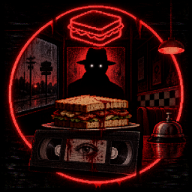
Serve Or Die walkthrough: Complete Demo Route, Order Tips, and Ending Advice
Use this Serve Or Die walkthrough to manage sandwich orders, spot progression triggers, and handle the demo's late-shift choices.
Before You Start the Night Shift
At first, the danger in Serve Or Die is easy to overlook: your next task looks like another sandwich order. This Serve Or Die walkthrough matters because the service loop is also the route forward, and a missed interaction can feel like a dead end once the shop begins changing around you. Use this Serve Or Die walkthrough to build a deliberate routine before the PSX-style visuals and VHS-inspired unease make every customer harder to read.
Dead Tape Studio describes Serve Or Die as a downloadable Windows demo and an early preview, meaning its mechanics, audiovisual details, and content may change before a final release. Start with Dead Tape Studio's official Serve Or Die demo page to verify the currently available build and download instructions.
| Officially described element | Why it matters during a run | Practical approach |
|---|---|---|
| Night-shift sandwich shop | The normal gameplay loop revolves around serving customers. | Learn the customer counter and preparation area before rushing. |
| Psychological horror | The familiar work routine gradually becomes unreliable. | Treat unusual sounds, visuals, and behavior as possible progression clues. |
| Strange customers | Not every interaction should be handled on autopilot. | Listen to the full request or scene before preparing food. |
| Short story-driven gameplay | Progress depends on completing expected tasks and events. | Finish the current objective before searching randomly for a new one. |
| Early-preview demo | Details may differ between builds or a future full game. | Avoid relying on unverified recipe charts or alleged permanent ending routes. |
The provided official description does not publish a complete recipe list, control guide, or developer-confirmed ending map. That makes careful observation more valuable than trying to memorize unsupported specifics.
Before serving your first customer, establish three habits:
- Read or listen to every order completely.
- Work on one sandwich at a time.
- Pause after every delivery to see whether the customer, counter, or room has changed.
Serve Or Die walkthrough: Shift Progression Without Major Spoilers
The available material points to a straightforward progression rhythm: complete service tasks, notice interruptions, and respond to what has changed in the immediate workspace. This Serve Or Die walkthrough focuses on that reliable structure rather than inventing scene-by-scene details that the official material does not confirm.
Community reports describe the demo as alternating between ordinary food service and increasingly unsettling scripted moments. Treat that pattern as useful player experience, not as a developer-published route script.
| Shift phase | Main goal | What to verify | Best response if progress stops |
|---|---|---|---|
| Opening moments | Learn the layout and available interactions. | You know where customers appear and where food is prepared. | Check nearby interactive objects and return to the customer-facing area. |
| First orders | Establish the take-order, prepare, and serve loop. | The active customer received the requested item. | Recheck the order before starting a new sandwich. |
| Repeated service | Keep the current request clear as new customers arrive. | You are not mixing ingredients or tasks between orders. | Finish the customer already waiting before looking for another trigger. |
| Environmental change | Identify what is different in the shop. | A sound, visual shift, behavior change, or new interaction stands out. | Search the immediate work area before remaking an already completed order. |
| Late-shift sequence | Balance required work with special encounters. | You have observed the event before acting. | Slow down and respond to the newest cue instead of treating it as routine service. |
For a first run, use this Serve Or Die walkthrough as a checklist rather than a speedrun guide. The game’s tension comes from the contrast between repetition and disruption, so fast inputs can make it easier to overlook the clue that actually advances the shift.
Use the Three-Check Reset
When you are unsure what to do next, run these checks in order:
- Check the customer. Is someone still waiting at the counter, and have you fully completed their request?
- Check the sandwich. Does the prepared item match the order you just received?
- Check the room. Did anything near the counter, preparation space, or surrounding shop noticeably change?
This sequence prevents a common mistake: abandoning an unfinished service task because the atmosphere makes it seem like the next event must be elsewhere. Community reports suggest that a waiting customer or incomplete interaction should be ruled out before broad exploration.
Make Sandwich Orders a Repeatable Process
The sandwich-making system is simple in concept, but it becomes harder to manage when a customer feels suspicious or an event breaks your concentration. A good Serve Or Die walkthrough treats order accuracy as a repeatable process, not a memory test you attempt under pressure.
Because the available sources do not provide confirmed ingredient-by-ingredient recipes, do not rely on unverified online lists. Instead, use the customer’s active request as the source of truth for each sandwich.
| Step | What to do | Self-check | Mistake to avoid |
|---|---|---|---|
| Capture the order | Read or hear the entire request before moving away. | Can you name every requested component? | Beginning preparation after remembering only the first item. |
| Stage the task | Focus on one customer and one sandwich. | Do you know whose order you are making? | Switching between several unfinished requests. |
| Assemble carefully | Add components according to the current request. | Does the finished item reflect the order? | Adding an unnecessary item or omitting a requested one. |
| Verify before serving | Take a short pause before returning to the counter. | Have you compared the sandwich against the request? | Handing it over immediately because the situation feels urgent. |
| Complete the handoff | Deliver the completed order to the waiting customer. | Did the interaction visibly resolve? | Assuming preparation alone advances the sequence. |
Example: A Customer Is Still Waiting
If a customer remains at the counter after you think you have finished, do not assume the horror sequence failed to trigger. Community reports point first toward unfinished service or a missed interaction.
Work through this short recovery sequence:
- Recall the customer’s request before making anything new.
- Confirm that the active sandwich is the intended order.
- Return to the customer and complete the handoff.
- Only then inspect the nearby shop for a changed object, sound source, or new prompt.
This approach saves time and keeps the narrative flow intact. It also avoids creating extra confusion by beginning a second order while the first one may still be active.
React to Changes Instead of Panicking
The official description emphasizes unsettling customers and an environment that becomes more disturbing as the night continues. This Serve Or Die walkthrough recommends one consistent response when routine service breaks down: stop, identify the change, inspect nearby, and then return to the active task.
Community reports describe environmental changes and unusual encounters as meaningful signals. They do not establish a universal rule for every scene, but they support a careful, observation-first play style.
| What you notice | First action | Avoid doing this | Likely useful next check |
|---|---|---|---|
| An unusual sound or visual shift | Stop moving briefly and identify where it came from. | Repeating the last food-prep action automatically. | Inspect the nearby counter, prep area, and changed part of the shop. |
| A customer behaves differently | Let the interaction play out before preparing food. | Assuming every visitor is a standard sandwich order. | Look for dialogue, prompts, or an altered response requirement. |
| No customer appears after a completed task | Review the last handoff and scan the work area. | Wandering through the entire location without a clear lead. | Check for a newly interactive object near the normal workflow. |
| A tense late-shift moment | Slow down and observe the immediate scene. | Mashing interactions to get through the moment faster. | Respond deliberately to the most recent cue. |
| A customer remains at the counter | Recheck the order and delivery. | Starting a different sandwich. | Confirm the service interaction is fully complete. |
A useful observation routine takes only a few seconds:
- Notice the newest change.
- Look near the place where the change occurred.
- Resolve any active customer request.
- Resume normal service only after the scene settles.
The game’s horror works because routine actions begin to feel uncertain. Keeping your own process predictable gives you a clearer way to separate an unfinished order from a genuine story event.
Demo Endings and a Replay Plan
Be conservative with ending claims. The official listing identifies the current build as an early preview but does not provide a confirmed list of ending conditions. Community reports in comments on the official page include one player experience describing outcomes tied to fulfilling or failing a mysterious customer’s order, while that player also said they were unsure whether additional endings existed.
That is a useful lead for replaying the demo, but it is not proof of a complete route map. Use the replay plan in this Serve Or Die walkthrough to test one variable at a time and keep your own notes.
| Replay run | Keep consistent | Change deliberately | Record afterward |
|---|---|---|---|
| Baseline run | Follow orders carefully and complete normal service. | Do not make intentional route changes. | Note key late-shift interactions and the final result. |
| Test run | Repeat the early service flow as closely as possible. | Change one meaningful late interaction or service outcome. | Write down exactly what differed from the baseline. |
| Confirmation run | Reproduce the same general route. | Repeat the single change that appeared important. | Check whether the result is consistent. |
| Cleanup run | Keep notes from previous attempts available. | Test only an unresolved interaction. | Separate confirmed observations from guesses. |
For the cleanest results, avoid changing several choices at once. If the outcome changes, you will not know whether it was caused by a missed order, an encounter response, or another late-shift action.
Community reports can point you toward interesting possibilities, but the safest conclusion is narrow: the demo appears replayable enough to justify testing important late-game interactions. Treat any detailed route claim beyond that as unconfirmed unless Dead Tape Studio publishes it.
Frequently Asked Questions
Is this Serve Or Die walkthrough for the full game or the demo?
This Serve Or Die walkthrough is scoped to the Windows demo described on Dead Tape Studio’s official page. The developer labels it an early preview, so future mechanics, scenes, and ending details may differ from the available build.
What should I do if I get stuck in Serve Or Die?
Start with the three-check reset: inspect the waiting customer, verify the active sandwich, and then look for a noticeable change near the immediate workspace. Community reports suggest resolving unfinished service before searching broadly for a progression trigger.
Are there confirmed sandwich recipes for every customer?
Not in the provided official material. The most dependable method is to use the active customer request, prepare one sandwich at a time, and compare the completed item with the order before serving it.
Does Serve Or Die have confirmed multiple endings?
There is no developer-published ending list in the supplied official source. Community reports mention player experience with different outcomes around a mysterious customer order, but they do not confirm every route or requirement.
Related Guides
Serve Or Die beginner guide: Find Reliable Help for Your First Session
A source-aware Serve Or Die beginner guide for finding Steam community help, judging tips, and planning your first session.
Serve Or Die customer guide: Orders, Encounters, and Survival Tips
This Serve Or Die customer guide covers orders, customer cues, cleanup steps, and spoiler-light demo survival tactics.
Serve Or Die gameplay guide: Complete Demo Tips for Every Night Shift
Learn a practical Serve Or Die demo routine for accurate orders, food prep, cleanup, and tense late-night shifts.
Serve Or Die guide: Reliable Research, Setup, and Progress Checklist
A practical Serve Or Die guide for verifying sources, planning your first session, and recording confirmed mechanics.