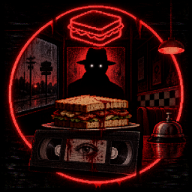
Serve Or Die customers: Who They Are and Why Every Order Feels Dangerous
A spoiler-aware guide to Serve Or Die customers, their orders, warning signs, and the story clues hidden in each shift.
Why the Customers Matter
At first glance, Serve Or Die customers are simply the late-night crowd at a small sandwich shop. In practice, Serve Or Die customers turn food preparation into a test of memory, timing, and nerve, which matters because a missed ingredient can interrupt both service and the story's momentum. The routine is deliberately familiar, so each strange interaction lands harder.
The Serve Or Die Steam store listing describes a psychological horror game in which a lone worker takes orders, prepares food, and runs a night-shift sandwich shop with an increasingly unsettling VHS-inspired atmosphere. Its key story idea is simple: some visitors appear ordinary, while others know too much or plainly do not belong.
The character-specific details below come from community reports and recorded demo playthroughs. They are useful for recognizing story patterns and avoiding order mistakes, but they should not be treated as a complete, developer-confirmed roster for every build of the game.
| Evidence type | What it establishes | How to use it |
|---|---|---|
| Steam store listing | The setting, sandwich-shop loop, psychological horror tone, and escalating customer unease | Use it as the official baseline for the game's premise |
| First community demo playthrough | Early customer orders, cleanup tasks, strange dialogue, and the growing menu | Use it for practical examples of player experience |
| Second community demo recording | A corroborating look at the demo's order flow and late high-pressure sequence | Use it to distinguish observed demo events from assumptions |
A Spoiler-Light Guide to Serve Or Die Customers
The most effective thing about the customer design is that the game does not begin with obvious threats. Early visitors establish the ordinary work routine: someone wants a basic sandwich, someone asks for a drink, and someone makes small talk. That normality gives the player a reference point before the shift starts to feel unstable.
As the night progresses, Serve Or Die customers increasingly function as story delivery systems. Their orders create mechanical pressure, while their behavior, payment, questions, and timing reveal that the shop is not a safe or ordinary workplace.
| Encounter pattern | Player experience from demo reports | Why it matters |
|---|---|---|
| Early ordinary order | A customer requests a simple chicken-and-lettuce sandwich | Teaches the basic take-order, cook, assemble, and serve loop |
| Familiar visitor | A visitor mentions off-shift plans before ordering a soda | Briefly connects the protagonist to a life outside the restaurant |
| Counter intruder | A rude customer crosses behind the counter and offers a bottle cap as payment | Breaks the boundary between worker space and customer space |
| Multiple-order visitor | An older customer requests two sandwiches with different ingredients | Adds multitasking pressure before the horror escalates |
| Uneasy observer | A customer says the location feels wrong and asks whether working alone is frightening | Gives the player a direct warning without explaining the threat |
| Disappointed worker | A visitor describes being fired and asks for food and several drinks | Reflects the game's broader anxiety around precarious work |
| Scientific or conspiracy-minded guest | A customer discusses blackouts, rooftop equipment, and unexplained frequencies | Expands the mystery beyond the sandwich shop |
| Coercive messenger | An armed visitor demands several fast orders for an unseen boss | Turns customer service into an explicit survival test |
Community reports also show that not every unsettling sign comes from dialogue. The sandwich-themed figure in the shop appears to speak or move, warning notes appear around the workplace, and power issues force the player to look away from the counter. The game uses customers to keep redirecting attention between food prep, the dining area, storage spaces, and the unexplained activity around the building.
The important lesson is that Serve Or Die customers should not be sorted into a simple "safe" or "dangerous" list. Even a routine order can be followed by an intrusion, a power outage, or a disturbing clue. The uncertainty is part of the story.
How to Handle Serve Or Die Customers Without Losing the Thread
Serving Serve Or Die customers is less about raw speed than reliable sequencing. The demo recordings show how easily a player can lose progress by forgetting a sauce, overcooking food, mixing up two sandwiches, or handing an incomplete item to the wrong visitor.
Use a consistent routine for every order, especially once soup, cookies, drinks, and multi-item requests enter the shift.
| Situation | Practical move | Why it helps |
|---|---|---|
| A new order begins | Repeat the full order in your own words before grabbing ingredients | Reduces forgotten toppings and unnecessary remakes |
| A customer wants several items | Finish one clearly defined item at a time | Prevents ingredients from being mixed across sandwiches |
| Protein is cooking | Keep checking it while preparing nearby ingredients | Avoids wasting food that has been left too long |
| A sandwich looks complete | Verify sauces, vegetables, and the requested protein before serving | A missing condiment can stop the interaction from advancing |
| A customer remains at the counter | Recheck the exact order, item condition, and delivery interaction | Helps distinguish an incorrect order from a story interruption |
| The power goes out or the room changes | Pause food prep and inspect the nearby area | Environmental changes often matter more than another sandwich |
| A late sequence becomes rushed | Stage ingredients in the order they will be needed, then serve immediately | Gives you the best chance of handling pressure without guessing |
Community reports illustrate why this discipline matters. Players encountered spoiled food after leaving it out too long, confusion over whether an ingredient had been added, and rejected orders caused by a missing sauce. The resulting tension is intentional: the kitchen never becomes complicated enough to feel like a restaurant simulator, but it becomes stressful because the player is distracted by danger.
A practical checklist for each visitor is:
- Identify every item in the order before starting.
- Prepare the requested sandwich before moving to optional or unrelated food.
- Check cooked ingredients before they spoil.
- Confirm the sandwich contains every listed component, including sauces.
- Deliver the correct item, then watch for a new prompt, changed room, or unusual behavior.
This approach will not make the shift comfortable. It will, however, stop basic food-prep mistakes from obscuring the story clues that Serve Or Die customers bring into the shop.
What Serve Or Die Customers Reveal About the Story
The story works because it does not rely entirely on cutscenes or direct exposition. A conversation about a blackout, an invalid payment, an unwanted visitor behind the counter, or an order made under pressure can all carry narrative weight.
The table below separates observed material from interpretation. The right column is a careful reading of the available evidence, not a developer-confirmed explanation of the full plot.
| Story signal | What player experience shows | What can safely be inferred |
|---|---|---|
| Work becomes threatening | Calls from management, expanding menu duties, service demands, and cleanup tasks continue as tension rises | Ordinary labor is the mechanism through which the horror escalates |
| Personal boundaries fail | Customers intrude behind the counter, arrive at uncomfortable times, or behave unpredictably | The restaurant offers no reliable separation between public and private space |
| The mystery reaches outside the shop | A visitor connects power outages with rooftop equipment and strange frequencies | Something larger may be affecting the area, but its purpose remains unresolved |
| An unseen authority exists | A threatening visitor invokes a boss who is unhappy with the service | An off-screen hierarchy influences the late shift, but its identity and goals are not confirmed |
| The mascot is significant | Demo recordings show a sandwich-themed figure that appears to speak or move | It is a focal point of the shop's unease, but its exact link to the customers is unclear |
Light spoilers: why the late rush matters
Community reports agree that a late demo encounter changes the rules by demanding several sandwiches quickly on behalf of a boss. That scene is important because it removes the illusion that good service alone can keep the protagonist safe. The same skills used for ordinary customers suddenly become a survival requirement.
One recorded player experience shows that completing the rush successfully leads to an additional short service beat before the closing confrontation. Treat that as observed demo progression, not proof of a specific ending route in every version of the game. What matters narratively is the reversal: the player has been trained to serve customers, then learns that serving correctly may still not be enough.
FAQ
Are Serve Or Die customers all dangerous?
No. The game's official description explicitly contrasts normal visitors with people who act strangely or should not be there. Player experience begins with straightforward orders and casual interactions, which makes the later behavior more unsettling. Treat each visitor as a regular service task first, but stay alert when the environment or dialogue clearly changes.
What should I do when Serve Or Die customers will not accept an order?
Check the complete ingredient list, including sauces, and make sure food has not spoiled. Then confirm that you are delivering the finished item to the active customer rather than dropping or misplacing it. If the order appears correct, inspect the shop for a new interaction or environmental change before remaking food repeatedly.
Do Serve Or Die customers explain the story?
They explain it indirectly. Conversations about the shop, power failures, strange activity, work stress, and the unseen boss build the game's lore through fragments. The available sources do not confirm a full explanation for every mystery, so it is best to separate what the game shows from what players infer.
Where can I check current official game details?
Use the Serve Or Die Steam store listing for the current description, platform information, and developer-provided updates.
Related Guides
Serve Or Die Characters: A Spoiler-Light Guide to the Demo's Unsettling Cast
Meet the key Serve Or Die characters in the demo, from uneasy customers to the boss, mascot, and threatening late-shift visitors.
Serve Or Die Ending Guide: How to Reach the Demo's Final Outcomes
Master the Serve Or Die ending with demo-route tips, final-order checks, and clearly labeled official facts and community reports.
Serve Or Die Endings: What the Demo Suggests and How to Test Them
Serve Or Die endings guide: verified demo details, player-reported outcomes, and a spoiler-aware replay plan.
Serve Or Die Lore Explained: Demo Story Clues, Characters, and Ending
Explore the Serve Or Die story, strange customers, VHS clues, and demo ending while separating confirmed evidence from theory.