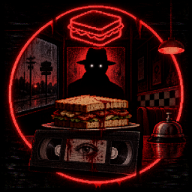
Serve Or Die Lore Explained: Demo Story Clues, Characters, and Ending
Explore the Serve Or Die story, strange customers, VHS clues, and demo ending while separating confirmed evidence from theory.
Why Serve Or Die Lore Matters
Serve Or Die lore turns a routine sandwich shift into a compact mystery about workplace pressure, surveillance, and whether the player can trust the shop's reality. That is why Serve Or Die lore matters: the food-service loop makes each later interruption feel consequential rather than ornamental. Dead Tape Studio presents the game as a PSX-style psychological horror experience set in a small sandwich shop during the night shift, where strange customers arrive and reality becomes increasingly difficult to read.
The official Serve Or Die demo listing from Dead Tape Studio establishes the reliable baseline: this is a short, story-driven horror game, currently represented by an early Windows demo. The developer also notes that visual, audio, mechanical, and gameplay elements may change before the final version, so no demo-only interpretation should be treated as permanent canon.
| Evidence level | What it supports | How to treat it |
|---|---|---|
| Official description | The late-night sandwich shop setting, psychological-horror premise, PSX-inspired presentation, and unstable reality | Canonical setup |
| Player experience | Specific scenes, customer dialogue, environmental changes, and late-demo threats shown in gameplay videos | Observed demo content, subject to revision |
| Community reports | Comments about routes, outcomes, or memorable scenes | Useful context, but not official confirmation |
| Interpretation | Themes such as labor anxiety, control, and paranoia | Theory, not established lore |
A careful Serve Or Die lore reading starts with that distinction. The game gives the player concrete work: cook meat, assemble requested ingredients, serve drinks, clean the shop, and respond to power problems. Player experience footage then shows that ordinary routine gradually colliding with notes, unusual visitors, altered surroundings, and increasingly threatening demands.
The important point is that the horror is not separate from the job. The job is how the horror reaches the player.
Story Timeline: How the Demo Escalates
The following progression reflects player experience from the supplied demo playthroughs. It is a practical way to track the story’s escalation, not an official scene-by-scene canon guide or a guarantee that every build will play identically.
| Demo stage | Routine task introduced | Disturbance or clue | Lore significance |
|---|---|---|---|
| Opening shift | Basic sandwiches, drinks, and the shop’s recipe notebook | A remote caller gives minimal direction and mentions a faulty fuse box | The player begins isolated, underprepared, and dependent on unseen management |
| First night | Serving standard customers and cleaning after closing | Odd notes, unsettling customer behavior, and a mascot that appears to change position | The shop begins to feel watched rather than merely understaffed |
| Second night | Soup expands the menu and increases multitasking | Customers mention strange reports, power outages, and an antenna on a municipal building | The unease may extend beyond the restaurant into the surrounding town |
| Third night | Cookies add another preparation step | More pronounced visual anomalies, threatening visitors, and an order linked to an unnamed authority | Service work shifts from stressful to openly coercive |
| Late-demo sequence | Completing highly specific orders under pressure | A figure invokes “the boss” and warns of consequences for unsatisfactory food | The title’s threat becomes literal rather than figurative |
The three-day structure is important. Serve Or Die lore does not open by explaining a monster, conspiracy, or supernatural force. Instead, it builds trust in a recognizable work routine and then bends that routine until every task feels unsafe.
Menu expansion also serves a narrative purpose. Sandwiches, beverages, soup, and cookies are not just added for variety. Each new task creates more opportunities for distraction, mistakes, delayed service, and vulnerability while the player is focused away from the counter or the shop entrance.
That design makes even a small interruption meaningful. A power outage forces the player outside. A customer’s unusual comment becomes more memorable because it arrives between routine orders. Cleaning after closing, usually a low-stakes chore, becomes another moment when the player is alone and exposed.
Characters, Motifs, and Serve Or Die Lore Clues
One of the most useful ways to approach Serve Or Die lore is to separate what characters claim from what the game visibly confirms. Many visitors seem credible at first, but their dialogue often sounds like rumor, warning, pressure, or misdirection.
| Figure or motif | Observed player experience | Grounded takeaway | What remains unconfirmed |
|---|---|---|---|
| The phone caller | Assigns work, introduces new menu items, and uses friendly workplace language | Someone is directing the player’s shift from a distance | Whether this caller is the feared “boss” |
| The shop mascot | Is repeatedly framed in unsettling ways and appears to change position in playthrough footage | The game uses the mascot as a visual warning signal | Whether it is alive, supernatural, or imagined |
| Concerned customers | Mention bad energy, strange stories, prior workers, and unusual events | The shop has a troubling reputation among visitors | Whether any individual account is true |
| Antenna and “frequencies” talk | A visitor connects outages to equipment seen on a municipal roof | The wider setting may be affected by unexplained activity | What the antenna does or who installed it |
| Armed messenger | Demands food on behalf of an unnamed authority and threatens consequences | A hidden power structure directly pressures the player | The authority’s identity and goals |
| Previous workers | A customer remarks that earlier employees were less careful | The player may not be the first person caught in this environment | What happened to those employees |
Several recurring motifs tie these clues together:
- Procedure becomes peril. Recipe accuracy, cooking time, and customer satisfaction are ordinary simulator mechanics, but the demo turns them into sources of tension.
- Infrastructure feels compromised. The power failure, outside storage area, and talk of antennas suggest the shop is not sealed off from whatever is happening nearby.
- Friendly language masks pressure. The employer’s casual tone and customer-service expectations contrast sharply with the threat that emerges later.
- Cleanliness implies history. Mopping floors and clearing spoiled food may seem mundane, yet remarks about prior staff make the workplace feel used, neglected, and potentially dangerous.
The strongest Serve Or Die lore thread is not that every customer belongs to one confirmed group. It is that the player cannot safely identify who is harmless, who is informed, and who is acting on behalf of something larger.
What the Serve Or Die Lore Ending Reveals
Demo-ending spoilers follow.
In the late sequence shown in player experience footage, an armed visitor makes it clear that someone described as “the boss” expects a particular order. The player is no longer simply trying to satisfy a difficult customer; they are working under a direct threat. In a shown failure outcome, a later warning indicates that the unseen authority was dissatisfied with the food and has responded accordingly.
That scene gives the demo a clear narrative escalation, but it does not solve its central mystery.
| Demo evidence | What it reasonably establishes | What it does not establish |
|---|---|---|
| An armed figure pressures the player to complete an order | The player’s service performance can have potentially deadly consequences | The exact condition that determines every outcome |
| A “boss” is invoked as the source of authority | An unseen higher-ranking figure matters to the threat | Whether the boss is the same person who calls the player |
| Visual abnormalities and unsettling encounters intensify | The game wants the player to question what is real | A definitive supernatural or psychological explanation |
| Customers mention earlier workers | The shop has a history worth investigating | The fate of those workers |
| Visitors discuss outages and frequencies | The story may extend beyond the restaurant | The antenna’s purpose or a confirmed town-wide conspiracy |
The most defensible interpretation is that the sandwich shop is part of a system of control, not just the backdrop for random scares. The player is evaluated, hurried, monitored, and eventually threatened through the same service rules that initially seemed harmless.
Still, the responsible Serve Or Die lore conclusion is restraint. The demo does not confirm that the caller, mascot, antenna, strange customers, and unnamed boss all have one shared origin. They may be connected, but the supplied material leaves room for the final game to reveal a different explanation.
Community reports on the official itch.io page mention observed outcomes related to fulfilling or failing a mysterious customer’s demand. That is player experience, not an official map of all endings or trigger conditions. Since Dead Tape Studio describes the release as an early preview, players should expect that routes, presentation, and lore details may evolve.
How to Read the Clues on a Replay
A replay is most useful when it treats the demo like evidence rather than a puzzle that must be solved immediately. Record what happens, identify who provides each claim, and keep an open list of unanswered questions.
| Replay pass | What to track | Useful question | Why it helps |
|---|---|---|---|
| First pass | Menu additions, customer order, and shift progression | What changes before each major event? | Establishes the basic story sequence |
| Second pass | Notes, mascot placement, sounds, power events, and exterior activity | Is this environmental change new or recurring? | Separates background atmosphere from deliberate clues |
| Third pass | Who says what about the shop, antenna, prior workers, or boss | Is this a confirmed event or a character’s opinion? | Prevents rumor from becoming assumed canon |
| Outcome pass | Order accuracy, timing, and the context of the final demand | What happened immediately before the ending sequence? | Helps distinguish service failure from narrative revelation |
The supplied player experience footage shows that wrong, incomplete, delayed, or spoiled food can complicate interactions. For lore purposes, complete one order at a time and note the ingredients before serving. Otherwise, it can be difficult to tell whether a hostile reaction is a scripted story beat or a response to an avoidable mistake.
A good note-taking checklist includes:
- Record the day and menu category for every unusual event.
- Write down the speaker before summarizing any dialogue.
- Mark visual changes separately from character claims.
- Capture the context before a late-game order or threat.
- Avoid treating a theory as fact just because it fits several clues.
The best Serve Or Die lore analysis is one that preserves uncertainty. The demo is designed to make the player uneasy precisely because it withholds a clean explanation.
Serve Or Die Lore FAQ
What does Serve Or Die lore focus on in the current demo?
Serve Or Die lore focuses on a night-shift worker whose ordinary sandwich-shop duties become increasingly threatening. The official premise confirms the psychological-horror setting and the growing uncertainty around reality, while player experience footage supplies the specific customers, power incidents, and escalating threats.
Is the phone caller confirmed to be the same “boss” mentioned later?
No. The caller supervises the player remotely, while the late-demo threat invokes an unnamed boss. The available material does not confirm that these are the same person, even though the possibility is intentionally suspicious.
Do the antenna and power outages confirm a supernatural conspiracy?
No. Players encounter dialogue about outages, a municipal rooftop antenna, and “frequencies,” but those details come through characters rather than an official explanation. They are strong clues, not confirmed answers.
Does the demo have confirmed multiple endings?
No official ending guide is provided in the supplied material. Community reports describe player experience with outcomes connected to a mysterious order, but the number of routes, their exact conditions, and their long-term importance remain unconfirmed.
Related Guides
Serve Or Die Characters: A Spoiler-Light Guide to the Demo's Unsettling Cast
Meet the key Serve Or Die characters in the demo, from uneasy customers to the boss, mascot, and threatening late-shift visitors.
Serve Or Die customers: Who They Are and Why Every Order Feels Dangerous
A spoiler-aware guide to Serve Or Die customers, their orders, warning signs, and the story clues hidden in each shift.
Serve Or Die Ending Guide: How to Reach the Demo's Final Outcomes
Master the Serve Or Die ending with demo-route tips, final-order checks, and clearly labeled official facts and community reports.
Serve Or Die Endings: What the Demo Suggests and How to Test Them
Serve Or Die endings guide: verified demo details, player-reported outcomes, and a spoiler-aware replay plan.