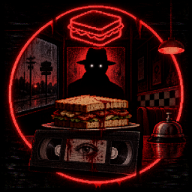
Serve Or Die story explained: Clues, night-shift escalation, and the demo ending
A spoiler-aware Serve Or Die story guide covering the night-shift setup, key clues, three-day escalation, and the demo ending.
Why the Ordinary Setup Matters
The Serve Or Die story begins with a job that should be forgettable: working alone in a small sandwich shop after dark. The Serve Or Die story matters because it turns each ordinary task, from building an order to restoring power, into evidence that the shop may no longer follow normal rules. This spoiler-heavy guide separates what the documented demo shows from the interpretations its deliberately incomplete clues invite.
Dead Tape Studio presents Serve Or Die as a PSX-style psychological horror game built around a late-night restaurant shift. The developer's official Serve Or Die game page describes a setting where strange customers arrive, the atmosphere worsens over time, and reality becomes increasingly difficult to trust.
The available demo footage begins with a phone call from the player's employer. The player is told to consult a notebook for recipes, open the shop, fulfill orders, and repair the exterior fuse box when power fails. That familiar routine creates the central tension: food preparation still matters even while the workplace becomes visibly and socially unstable.
| Story component | What the source material establishes | Why it creates tension |
|---|---|---|
| Isolated night shift | The player works alone in a small sandwich shop after dark. | There is no dependable coworker to confirm what is happening. |
| Routine food preparation | Players make sandwiches, serve drinks, and later prepare soup and cookies. | Precision keeps the player focused while unsettling events compete for attention. |
| Exterior fuse box | Power failures require the player to leave the shop and restore electricity outside. | A practical chore becomes a reason to enter a more vulnerable space. |
| Strange patrons and mascot | Customers behave unpredictably, while a sandwich-like shop figure acts unnaturally. | The game makes both people and props feel potentially unsafe. |
A Night-by-Night Serve Or Die Story Breakdown
Player-experience footage presents the demo as three escalating workdays. The timeline below focuses on repeated on-screen events and dialogue rather than treating streamer reactions as canon. The official demo notice also warns that visuals, sounds, mechanics, and gameplay elements may change.
| Shift | New work responsibility | Key story developments | Escalation |
|---|---|---|---|
| Day 1 | Basic sandwiches and drinks | The player encounters unsettling customers, hears warnings about the shop, sees the mascot behave strangely, and investigates a power outage. | The job becomes suspicious rather than merely inconvenient. |
| Day 2 | Soup joins the menu | Dialogue references unusual reports, repeated outages, a rooftop antenna, and mysterious “frequencies.” | The danger begins to feel connected to events beyond the store. |
| Day 3 | Cookies join the menu | The mascot appears more threatening, perception becomes less reliable, and a messenger invokes an unseen boss while demanding a large order. | The player is placed under direct pressure from a larger force. |
Day 1 is effective because the game does not immediately explain the threat. Customers initially seem like ordinary late-night visitors with specific sandwich requests. Gradually, the conversations become more invasive, an animated sandwich figure draws attention to itself, and an encounter outside the shop makes the power-repair task feel unsafe.
The first shift also establishes an important pattern for the Serve Or Die story: the player must continue working while fear builds. Even when an interaction feels wrong, there is still a customer at the counter, an order to remember, or a closing task to finish. Horror emerges from being unable to simply walk away.
Day 2 expands the menu with soup, but the more important development is the widening scope of the mystery. One visitor discusses frequent outages and claims to have seen people installing an antenna on a nearby roof. Another line points toward “frequencies,” suggesting that the electrical failures may be more than a maintenance problem.
That dialogue does not prove what the antenna does, but it moves the story beyond a single creepy workplace. The shop could be part of a larger disturbance, or the player may be hearing fragmented explanations while their perception worsens. The game deliberately leaves both possibilities open.
By Day 3, the pressure becomes more explicit. The mascot appears with a knife in player footage, a customer interaction raises the possibility of duplicate or altered appearances, and an apparent armed messenger demands several sandwiches for a boss who does not tolerate delays. The Serve Or Die story shifts from uneasy uncertainty to a threat that feels organized and personal.
Clues That Shape the Serve Or Die Story
The Serve Or Die story works best when confirmed events are separated from interpretation. The demo gives players repeated clues, but it does not provide a complete lore document naming the villain, explaining the mascot, or confirming whether every abnormal sight is supernatural.
| Clue | Directly shown or said | Cautious interpretation |
|---|---|---|
| The sandwich mascot moves and speaks | Player footage shows the shop figure behaving like a living presence. | It may represent a supernatural entity, a hallucination, or the shop's influence. Its identity is not confirmed. |
| Customers mention strange energy and local stories | Visitors refer to an off feeling in the location and unusual reports. | The community may already suspect the shop, but the source of the disturbance remains unclear. |
| Repeated power outages and antenna talk | Dialogue connects outages with an alleged rooftop installation and “frequencies.” | The antenna may be relevant, but no source proves a direct causal link. |
| A watcher and altered appearances | The player encounters a threatening figure and sees dialogue suggesting something is moving or duplicated. | These moments support an unreliable-perception reading without conclusively proving one. |
| The employer calls workers “family” | The boss frames the business as a family operation while expanding duties and demanding compliance. | This may signal coercive control, especially once the boss is linked to intimidation. |
A useful reading is that the horror crosses three areas at once: the physical shop, the people who enter it, and the player's ability to interpret what they see. A broken fuse box is a physical problem. A customer discussing frequencies is a social clue. A walking sandwich or altered visitor challenges the player's sense of reality.
The strongest interpretation is not necessarily that every strange event has one simple answer. Instead, the game uses overlapping signals to make players question whether the shop is haunted, manipulated by outside forces, tied to the boss's operation, or filtered through a stressed and frightened protagonist.
That ambiguity is important. The available sources do not identify the boss, explain the antenna's purpose, or confirm the mascot's nature. Treating those unanswered details as intentional mysteries makes the psychological horror more effective than forcing a single explanation onto the demo.
What the Serve Or Die Story Ending Means
The Serve Or Die story ending centers on an urgent order delivered under threat. In the recorded player-experience route, a messenger says the boss is waiting and warns that delays could have severe consequences. The shift's familiar food-preparation mechanics suddenly become a high-stakes test.
| Ending detail | What can be said from available material | Reliability |
|---|---|---|
| The pressured order | An intimidating messenger demands a large set of sandwiches for the boss. | Shown in player-experience footage. |
| The final warning | A later message says the boss was dissatisfied and sends regards. | Shown in a documented demo playthrough. |
| Alternate outcomes | Community reports mention footage covering a fulfilled-order route and a failed-order route. | Community-sourced information, not a developer-confirmed route guide. |
| Full-game implications | The demo notice says elements may change before or within the final version. | Official developer guidance. |
The shown route ends as a cliffhanger rather than a complete resolution. The boss remains off-screen, the protagonist's final fate is not definitively shown, and the threat is delivered through a message instead of a full confrontation. That restraint is consistent with the game's VHS-inspired psychological horror approach.
Community reports on the game's page suggest that players have explored more than one possible result around the mysterious order. Those reports are useful for replay-minded players, but they should not be treated as confirmation of every ending condition or as proof that the demo's routes will remain unchanged.
The ending leaves four major questions unanswered:
- Who is the boss, and how directly are they connected to the shop?
- Is the mascot acting independently, or is it part of the same threat?
- Are the outages and alleged antenna connected to the customer's strange behavior?
- Is the protagonist seeing objective events, or is the night shift distorting their perception?
How to Follow the Story Without Missing Key Moments
The story is easy to miss if you treat Serve Or Die only as an order-management simulator. The most useful approach is to respect the work tasks while actively tracking the changes around them. Each added menu item and strange conversation helps mark the game's rising pressure.
| Moment | Practical action | Story benefit |
|---|---|---|
| A customer gives an order | Listen to the full request and verify ingredients in the notebook before serving. | Dialogue often carries clues alongside recipe details. |
| The power goes out | Complete the fuse-box task carefully and observe the area before returning inside. | The exterior trip is one of the clearest shifts from routine work to danger. |
| A new menu item appears | Note whether the shift has added soup, cookies, or another responsibility. | Menu growth acts as a simple marker of the three-day escalation. |
| A demand becomes urgent | Write down the requested ingredients before assembling the order. | This reduces mistakes during tense sequences and supports route exploration. |
For a first playthrough, avoid assuming that cleanup and closing tasks are empty downtime. The game uses ordinary work transitions to maintain unease, so the tension does not end just because the sign has been flipped to closed.
It also helps to keep two kinds of notes: confirmed events and personal theories. For example, “a customer mentioned an antenna” is confirmed dialogue, while “the antenna caused the hallucinations” is a theory. That distinction prevents a compelling interpretation from becoming an unsupported conclusion.
Finally, the Steam content description warns of psychological horror, stalking-like situations, aggressive behavior, implied violence, and potentially uncomfortable scenarios. Players sensitive to sustained tension may want to approach the story in shorter sessions rather than treating it as a purely casual cooking game.
Serve Or Die Story FAQ
Is the Serve Or Die story fully explained in the demo?
No. The demo establishes the night-shift setting, the deteriorating atmosphere, the suspicious boss, unusual customers, and several environmental clues. It does not fully explain the mascot, the antenna discussion, the nature of the disturbances, or the protagonist's final outcome.
What happens at the end of the Serve Or Die demo?
In documented player experience, an intimidating messenger orders multiple sandwiches for an unseen boss. After the sequence, the player receives a message indicating that the boss was unhappy with the result and sends regards, creating an implied threat rather than a complete resolution.
Is the sandwich mascot the main villain?
The available material does not confirm that. The mascot is clearly unsettling and increasingly threatening in footage, but the boss, strange customers, power outages, and possible perception shifts all point to a broader mystery.
Will the full game keep the same Serve Or Die story details?
Not necessarily. Dead Tape Studio's demo notice says that visuals, sounds, mechanics, and gameplay elements remain in development and may differ from the final version.
Related Guides
Serve Or Die Characters: A Spoiler-Light Guide to the Demo's Unsettling Cast
Meet the key Serve Or Die characters in the demo, from uneasy customers to the boss, mascot, and threatening late-shift visitors.
Serve Or Die customers: Who They Are and Why Every Order Feels Dangerous
A spoiler-aware guide to Serve Or Die customers, their orders, warning signs, and the story clues hidden in each shift.
Serve Or Die Ending Guide: How to Reach the Demo's Final Outcomes
Master the Serve Or Die ending with demo-route tips, final-order checks, and clearly labeled official facts and community reports.
Serve Or Die Endings: What the Demo Suggests and How to Test Them
Serve Or Die endings guide: verified demo details, player-reported outcomes, and a spoiler-aware replay plan.